

Once you have traveled, the voyage never ends, but plays out over and over again in the quietest chambers. The mind can never break off from the journey.
Pat Conroy
We, meaning a majority of people who live in North America, and perhaps in other parts of the world, have an insatiable need for instant gratification. I see something in a store window that creates excitement in my brain, and lust evolves until I have secured said treasure. This same scenario is easily reimagined using money, relationships, cultures, and/or land as the “treasure”, depending on the self-control, and moral compass of the person. As I have traveled, I have heard this same story repeatedly across the continuum of world history, and cultures. And still, another chapter is being written, again, in my life time.
In contrast to instant gratification, is reflective living…spending time “in the quietest chambers”. I have learned that life’s most valuable gifts come unexpectedly; friendships growing from an organic encounter, lessons understood through nature, the cycle of life, the appreciation expressed in a smile, or a gentle word. However, living a reflective life is its’ own lesson in patience. I am reminded of a quote attributed to Buddha, “There is no path to happiness: happiness is the path.” Each of us is responsible for our own personal growth in empathy, compassion, kindness, and inclusion. Traveling in the company of these valuables certainly creates a joyful journey!
THREE VISTAS
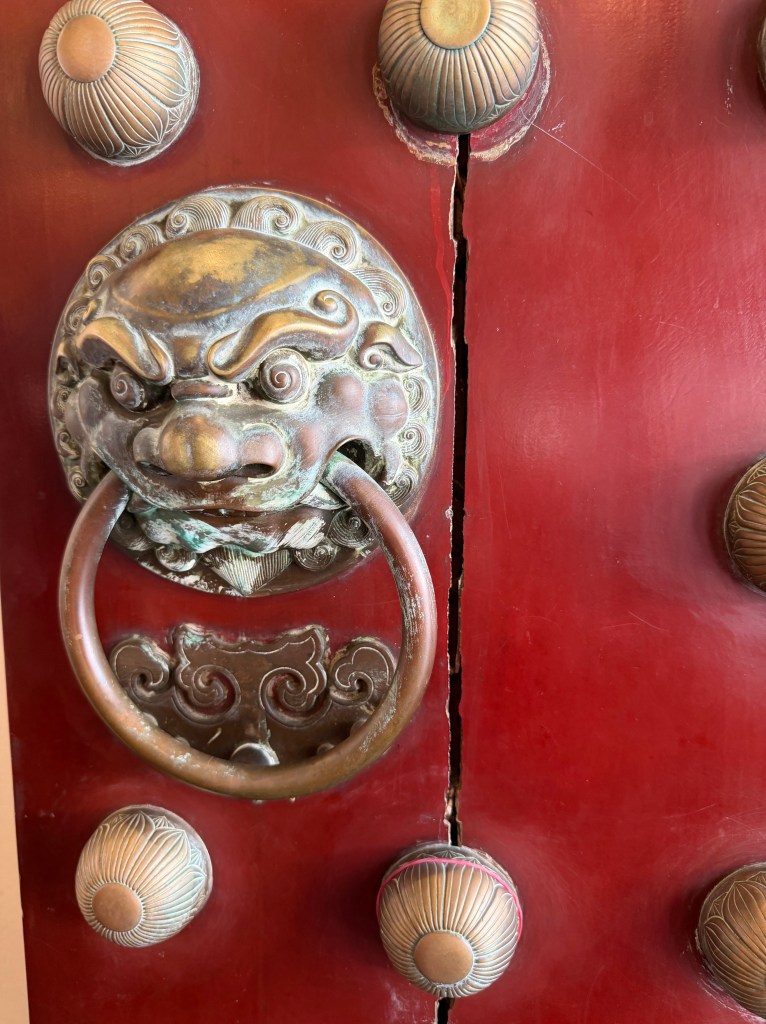

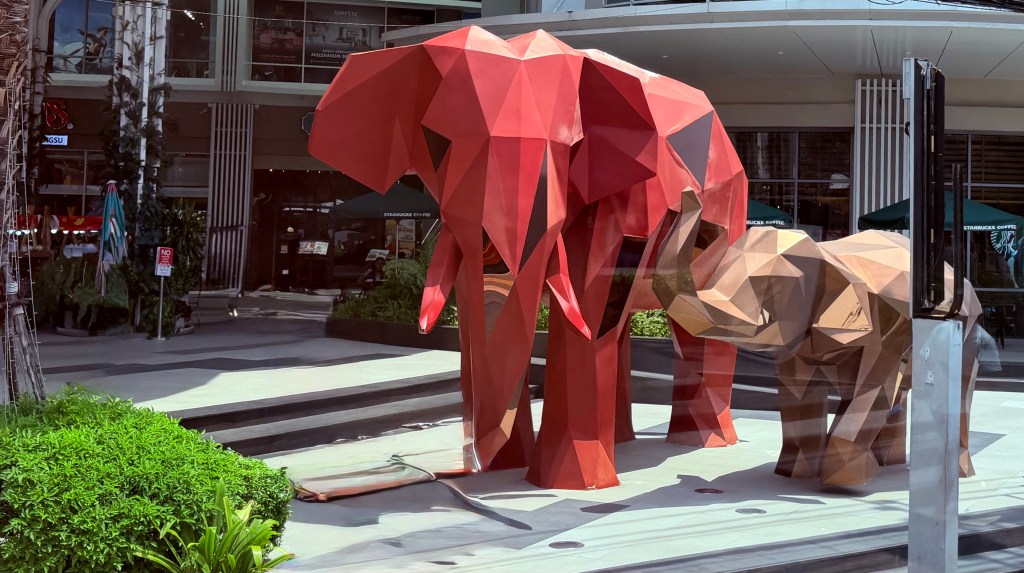
Photos left to right: Door knocker on Buddist Chinese Temple, Sentosa cable car, Singapore; Elephants at a shopping mall in Phuket, Thailand.
TWO THOUGHTFUL THREADS
- Did you know that cashews grow on a tree in a pear shaped apple? How the single raw cashew imbedded in the ripe apple is separated, processed, and becomes the sealed package you purchase at the store is a story of intense labor, persistence, and ingenuity. When the cashew fruit is harvested, the seed is encased in 2 layers of skin, and covered by a hard shell. It is called the “drupe”, and protrudes from the fruit looking like a fish hook. The drupe is separated from the fruit, and dried in the sun for a couple of days. Then drupes are roasted to remove the hard shell. The shell is toxic, and can cause skin irritation similar to poison ivy. Once the shell is removed, the edible seed is steamed again to peel off the tough papery skins. Finally, the seed is roasted a second time to ensure it is ready for consumption. Only then, are cashews packaged, and shipped to stores. The whole process of preparing a cashew seed takes approximately 10 days from harvest to shipping. The next time you purchase a package of cashews, take a moment to pause. Appreciate the labor that went into preparing your snack!
- Land covers 29 percent of the earth, which means that water covers the remaining 71 percent. Approximately 96 percent of earth’s water is ocean, or salt water, leaving only 2.5 percent of water as the freshwater we find in rivers and lakes. These numbers are difficult to appreciate, until one sails for weeks on seaways. Having sailed from the Atlantic Ocean to the Pacific and Indian Oceans, and multiple straits, seas, and gulfs in between I am beginning to understand the incredible value the ocean holds for all of nature. For most of way the water has been various shades of grey, blue or green depending of the quality of light, and the purity of the water. Beautiful, even majestic to behold when the sun shines, the ocean seems to take on moods. More recently, the water carries litter…bottles, plastic bags, lumber, and other debris. Seeing this is a stark reminder that the health of our ocean depends on all of us, even those of us who live on landlocked continents. Being a steward of our earth is a kindness that includes others, including generations to come.
ONE HISTORICAL NUGGET

Etymology is the study of the origin of words; how their forms and meanings change and evolve through history. As I explore the world on this journey, I’ve been surprised multiple times when I understand the evolution of common words in the English language. For example: Carat is the standard weight of a gemstone, specifically diamonds. The word “carat” originated from the Ancient Greek word for “carob seed”. In ancient trading days, jewelers used carob seeds on a scale to measure the weight of a diamond. That same Ancient Greek word for “carob seed” is Karōtón, which roughly translated, means horn, describing the shape of a carob seed pod, and the edible root we know as “carrot“.

 Invisible Life Threads
Leave a comment